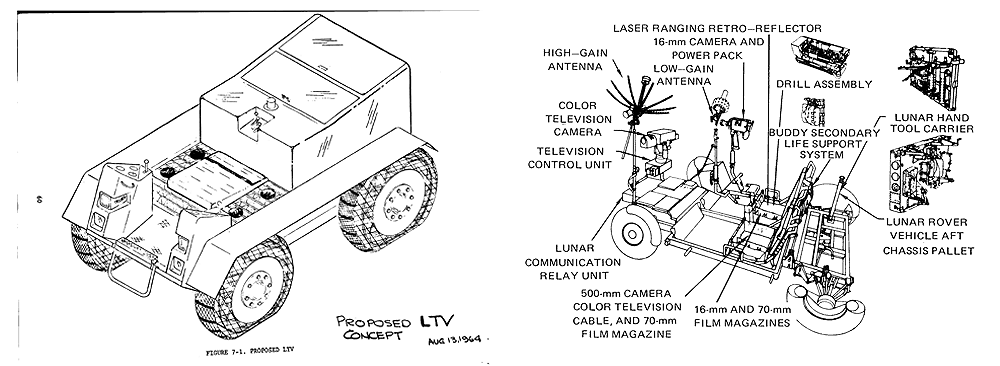
Looking deeper into Eduardo San Juan’s MOLAB proposal, we find a “lunar terrain vehicle” design we can set side by side with the final Apollo LRV for comparison: (click to see larger)
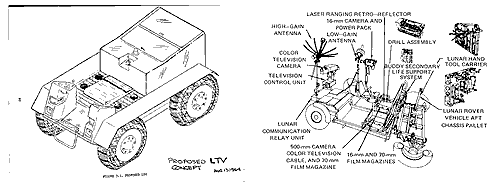
Several major differences are immediately visible: the San Juan LTV is much higher and narrower, built for only one person who boards by a rung at front, whereas the Apollo LRV is low to the ground and seats two who enter from the sides. San Juan’s LTV uses a joystick (rather then the Apollo LRV’s T-Bar steering stick and central control console), and does not appear to include the mounts for antennas, cameras, or backup life support systems; most of these would probably have been intended to be stowed in or attached to the general-purpose rear equipment locker, an accessory omitted from the Apollo LRV. Designed for extended utility on a moon base rather than as a mere short-term expeditionary vehicle, the San Juan LTV seems to include headlights, which would be sensible for the two weeks that one side of the moon is in the dark. Both rovers deploy via a swing-out assembly mounted to the lunar lander legs, though the San Juan LTV, being something of a more idealized initial design, appears ready to roll out immediately on deployment, whereas the Apollo LRV needed to be drawn down by a series of reels, then unfolded along its rear and forward chassis and wheels.
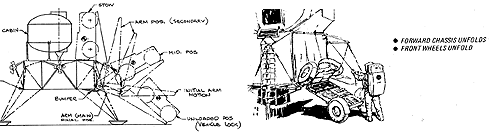
The mobility system is an especially noticeable difference: San Juan’s LTV uses much larger tires woven from a less fine mesh, with extra allowance for sinkage into soft regolith, and lacking the titanium chevron tread on the Apollo LRV, but sporting a much larger, flatter, front-to-back fender.
The differences clearly point out that San Juan’s LTV designs were definitely not the same ones Boeing/GM made for Apollo 15, 16, and 17. The MOLAB LTV proposals had a somewhat different purpose in mind, with different requirements and specifications: a large truck-like single-passenger rover with much more room for cargo, designed for long-term lunar use and the building of a lunar base, whereas the final Apollo LRV focused on providing two astronauts with wide surface area coverage for maximum fulfillment of exploration goals. It’s possible that some concepts from the San Juan proposal may have filtered down to the Boeing/GM LRV design in collaboration with MSFC, but considering that there were several MOLAB proposals from different contractors, and the final Apollo lunar exploration profile was quite different from the original MOLAB plans, the chances of even this tenuous connection are slim at best.
I’ve had additional correspondence with GM/Delco LRV engineer Bruno Nikodemski (previously mentioned here) and San Juan’s daughter Elisabeth (whose original email inspired all this research), and there’s a lot going on in the background with regard to various engineers’ legacies of technical documentation from that era. Elisabeth is quite adamant that, even though San Juan did not actually “invent” the lunar rover per se, his singular contributions to the development of articulated wheel systems persist to various forms of contemporary mobility technology. There is mention of a previous San Juan study on articulated systems in his MOLAB proposal bibliography, but this study is not available in digital format, and I fear my initial skeptical iconoclasm towards San Juan has not endeared me to his family, so I’m not feeling too inclined to press for more printed material. In any case, my focus has been on the history of the Apollo lunar rover, and I have found what I wished to know.
(There is more to come, however, as Nikodemski has shared more lunar rover material with me, with many fascinating details.)